

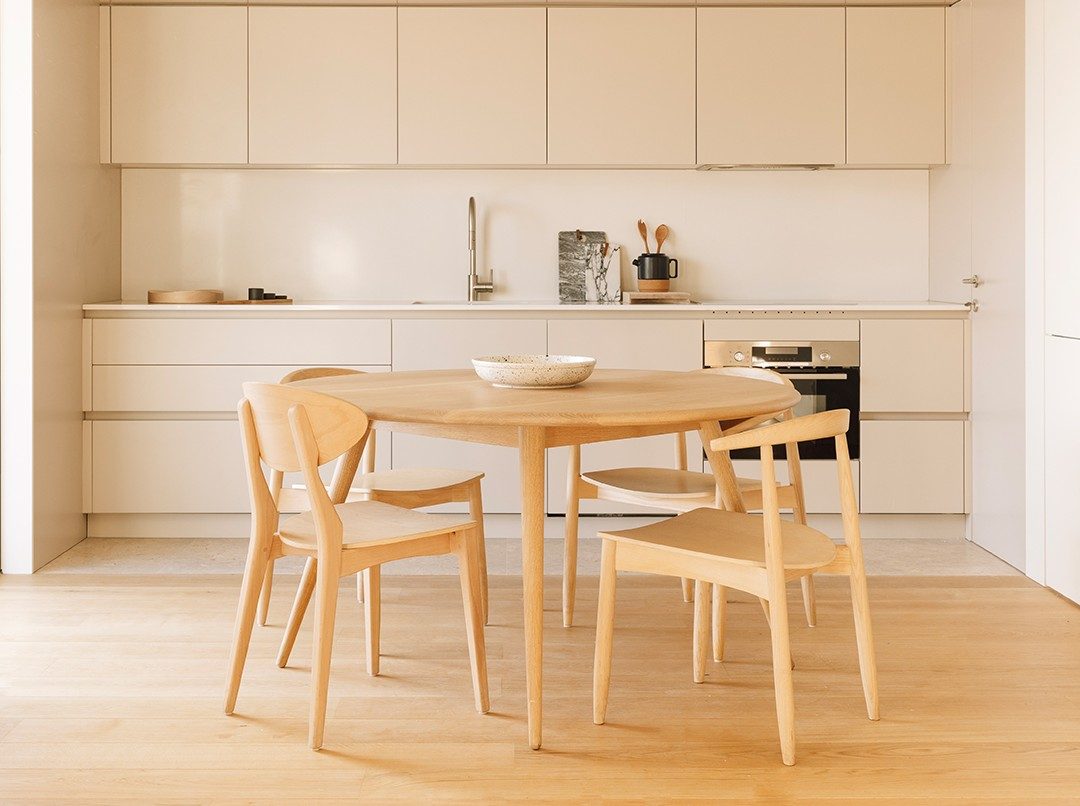
The table has evolved alongside technical and social needs.
Its origins go back to Ancient Egypt, where tables first appeared as rudimentary stone platforms intended solely to keep objects off the ground. In Ancient Greece they were often stowed under the beds after meals. People ate reclining, to display social status and to allow for prolonged conviviality during the symposium. The Romans elevated the design with the use of marble and metal, creating the mensa lunata (a semicircular table) with richly ornamented legs.
From the Middle Ages onwards, improvements in carpentry techniques led to the adoption of integrated legs, sturdier joinery systems and a greater concern for durability and ergonomics. This stabilisation marked the table's transition from a temporary element to a central, permanent piece.
This guide sets out technical standards to ensure that furniture is suited to the space.
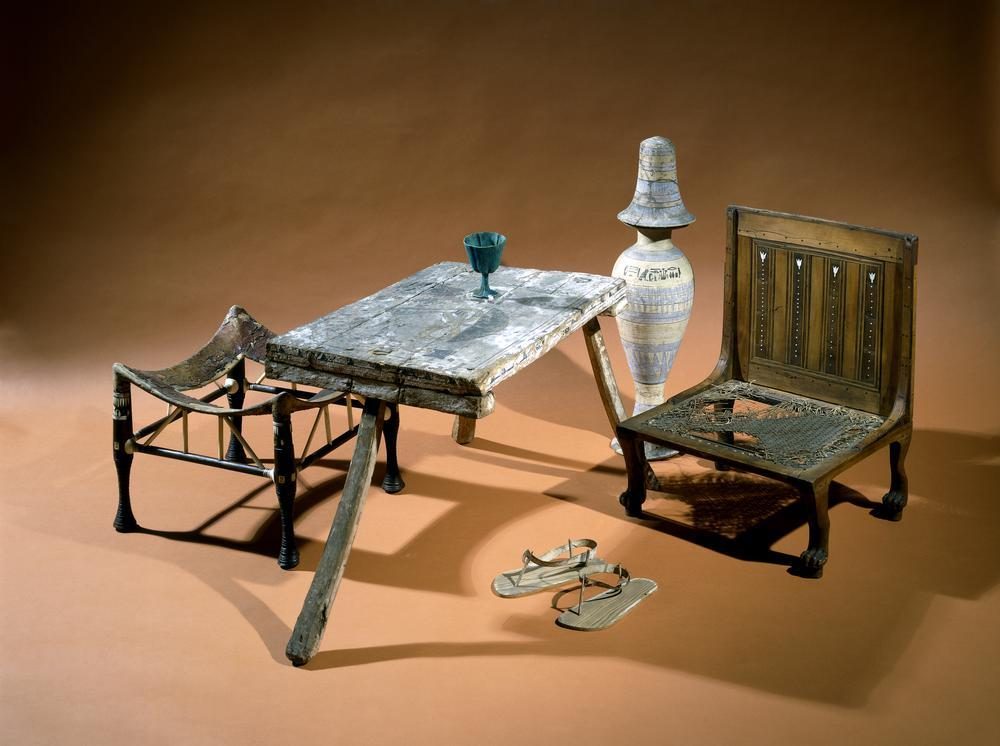
Source: Ruler: Amenhotep III; Period: 18th Dynasty; Date of production: 1400 BC–1350 BC (approximately). The Trustees of the British Museum.
Use
Based on Ernst Neufert's anthropometric studies and on international ergonomic standards (such as ISO), furniture design defines dimensions that respect the proportions of the human body to ensure health and comfort.
In dining rooms, 60 cm of width per person is allowed to avoid bumping elbows, with a standard height of 75 cm that suits seats of 40 to 45 cm, allowing for correct spinal posture. In offices, on the other hand, the width ranges from 120 to 160 cm with a depth of 60 to 70 cm to ensure a comfortable distance from the monitor.
Circulation
The space behind the chair should be around 80 cm to ensure good circulation. When seated, try to keep your elbows at a 90° angle for a natural posture. These guidelines are in line with standards such as ISO 9241 (ergonomics of human-system interaction) and EN 527 (office furniture), issued by the European Committee for Standardization.
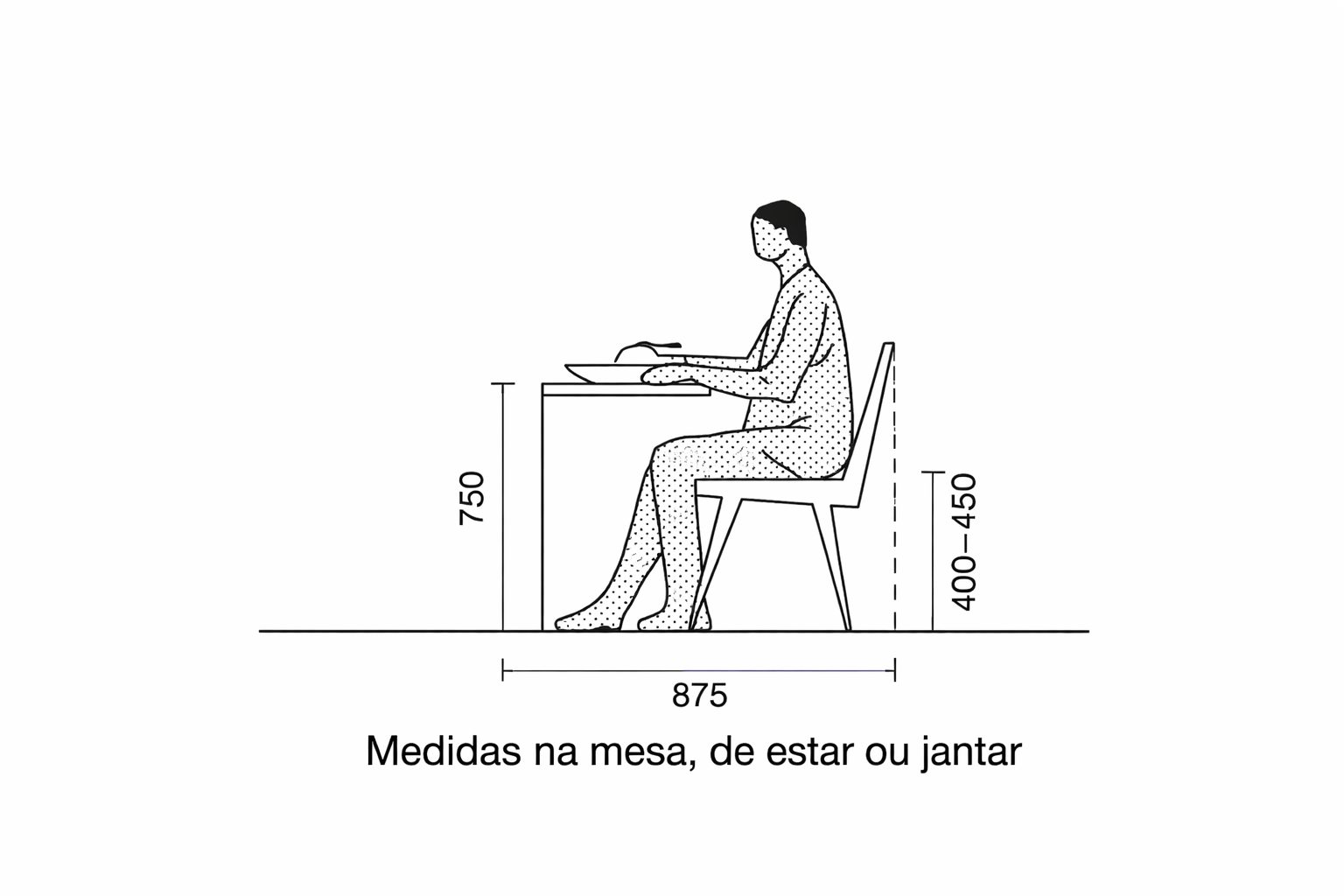
Source: Illustration with ergonomic measurements for a living or dining table. Source: Simples Decoração, “Afinal, existem regras na decoração?” (“So, are there rules in decorating?”), 2013.
The table in the design process
Ergonomic dimensions should not be understood as absolute values, but as working references in conceptual design. These parameters should be applied in the early stages of the preliminary study, ensuring that form, circulation and use develop coherently.
However, the standard sets statistical averages. A project faces specific realities. It is therefore pertinent to ask: when is it legitimate to adjust or reinterpret these values?
In compact housing or high-density restaurants, reducing the width per user may be a conscious decision, provided its impact on comfort is understood and offset by other spatial or material solutions. Departing from the standard is not a mistake; it is an informed choice.
Shape
Rectangular
Aligns with walls and linear perimeters, making the most of narrow areas. Suitable for 6 to 12 people, depending on its length (standard 180 cm to 320 cm).
Requires a minimum width of 90 cm to allow for centrepieces without encroaching on the space for plates.
Square
Dimensions of 100 x 100 cm are ideal for 4 people. It encourages equal interaction between all diners, since everyone sits at the same distance from the centre.
It offers a generous central area for decoration or for serving dishes, but requires ample space, as square tables for more than 8 people can make it hard to reach the centre and to move around in narrow rooms.
Round
Encourages direct eye contact between everyone at the table.
A diameter of 120 cm seats 4 to 6 people, while 150 cm seats up to 8.
The absence of corners makes circulation easier in passageways, but a larger diameter moves diners further from the centre of the table.
**
Oval**
Combines the capacity of a rectangular table with the visual fluidity of a round one. The absence of right angles eases movement in small spaces and eliminates points of impact.
A 180x100 cm table keeps the usable seating area while reducing its visual weight in the room.
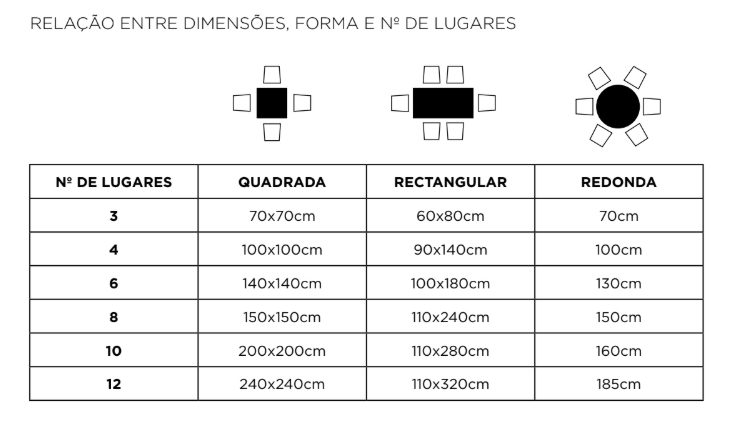
Source: Illustration of the relationship between dimensions, shape and number of seats in dining tables. Produced by Boa Safra.
Online Selection
The Interior Guider online shop brings together a selection of dining tables chosen for their build quality and diversity of materials.
.
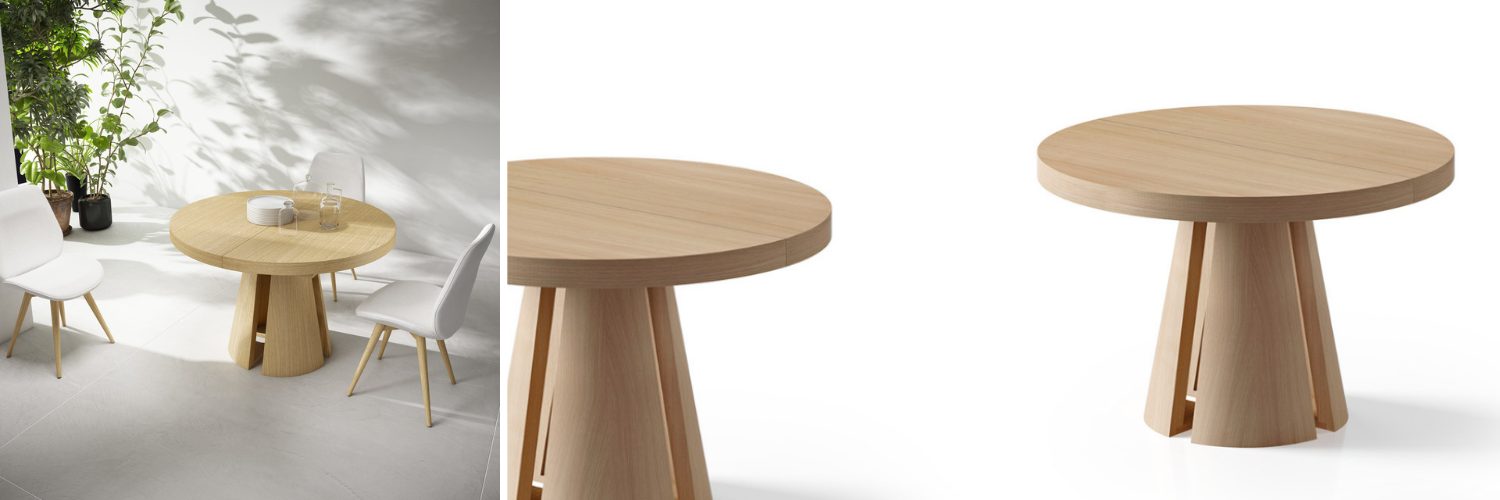
Bian Table
With its round design, the Bian table fits easily into smaller spaces, keeping the way clear. Its extending system increases seating capacity as needed.
View in the shop: https://interiorguider.com/mesa-bian/
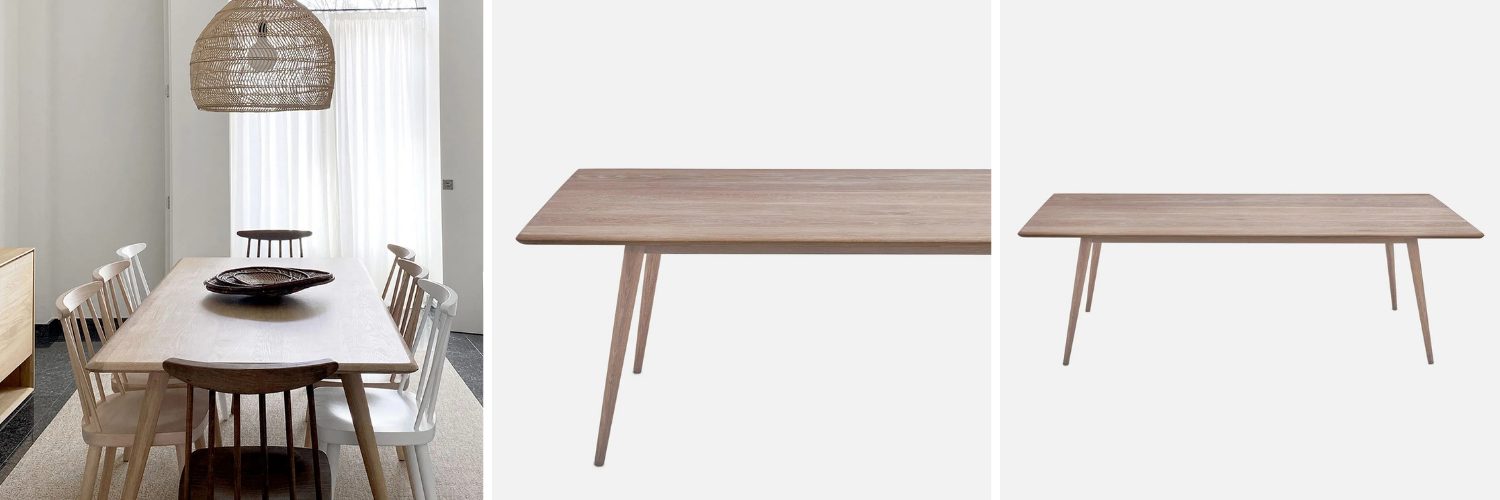
Family Table
The raw material of the Family Table is rigorously selected. The surface is treated with 100% natural oils, allowing the wood to breathe, absorbing and releasing moisture, and contributing to healthier indoor air quality.
View in the shop: https://interiorguider.com/mesa-family/
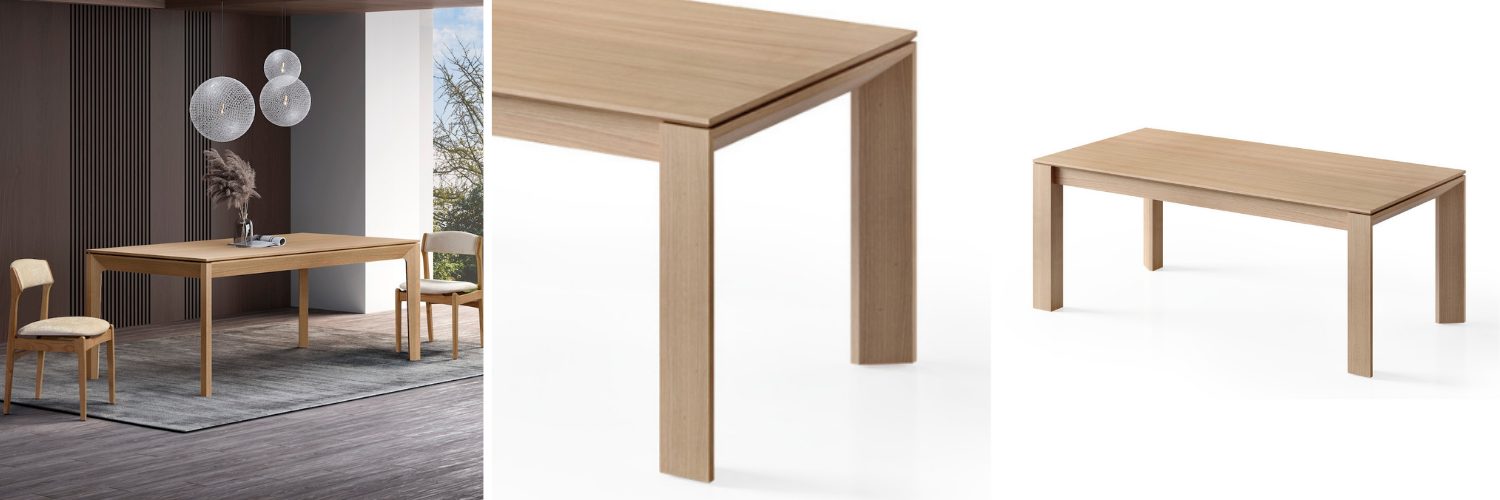
Taci Table
The mitred cut offers greater comfort to those sitting at the ends. It blends naturally into a variety of settings.
View in the shop: https://interiorguider.com/mesa-taci/
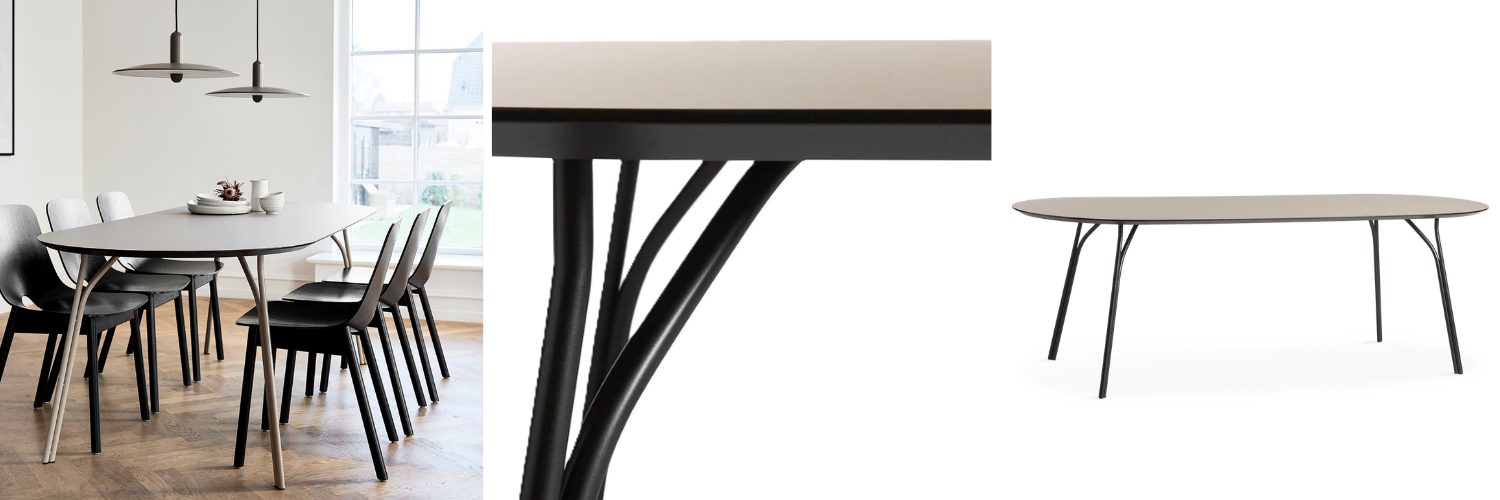
Tree Table
Each leg is made up of two parallel steel tubes that branch out at the top. This geometry creates multiple points of support for the tabletop, distributing the weight evenly. The piece forms a branching pattern inspired by trees.
View in the shop: https://interiorguider.com/mesa-jantar-tree/
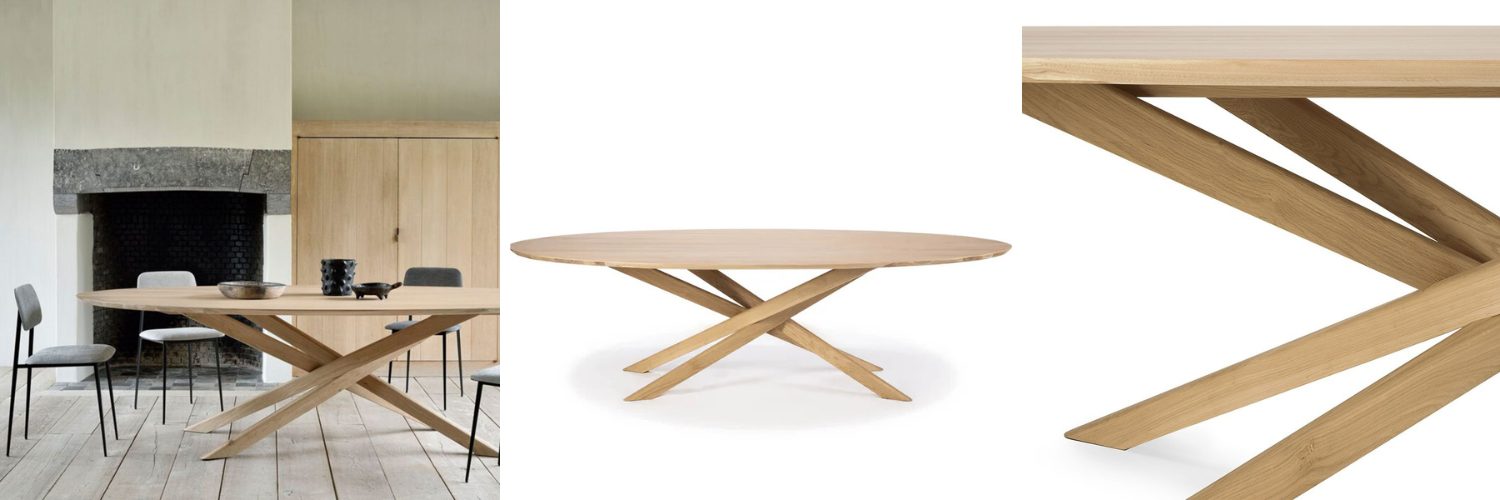
Mikado Oval Table
The legs of the Mikado Table cross beneath the top, forming a centralised support structure. The design is based on a system of interlocking pieces that distribute the weight in a stable way.
View in the shop: https://interiorguider.com/mikado-dining-table-oval/
The full selection of tables available in the Interior Guider online shop: interiorguider.com